Blog
Flush Doors vs Panel Doors: Which One Fits Your Home?

“Flush door” and “panel door” get used interchangeably sometimes, but they’re built differently, priced differently, and suited to different rooms. Here’s the actual difference, and how to decide which one to order.
What a flush door is
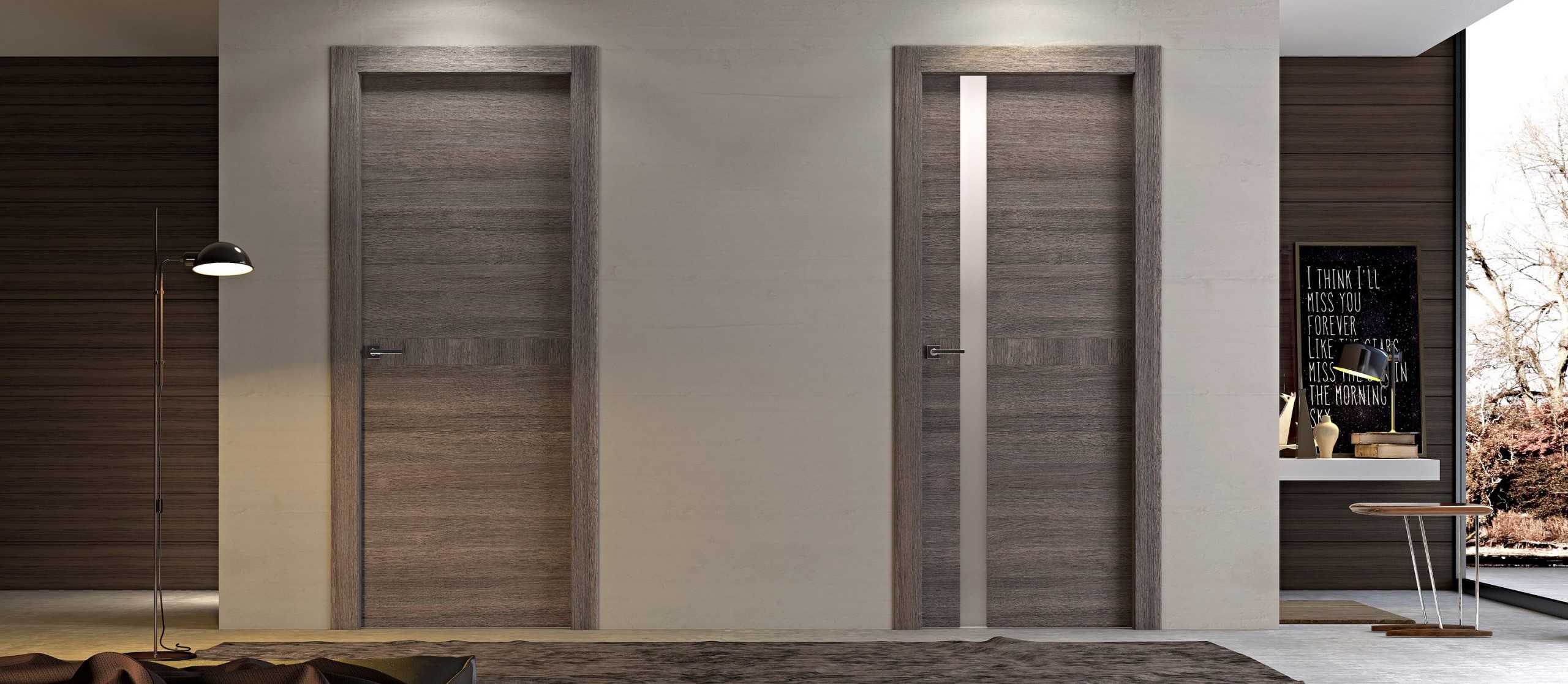
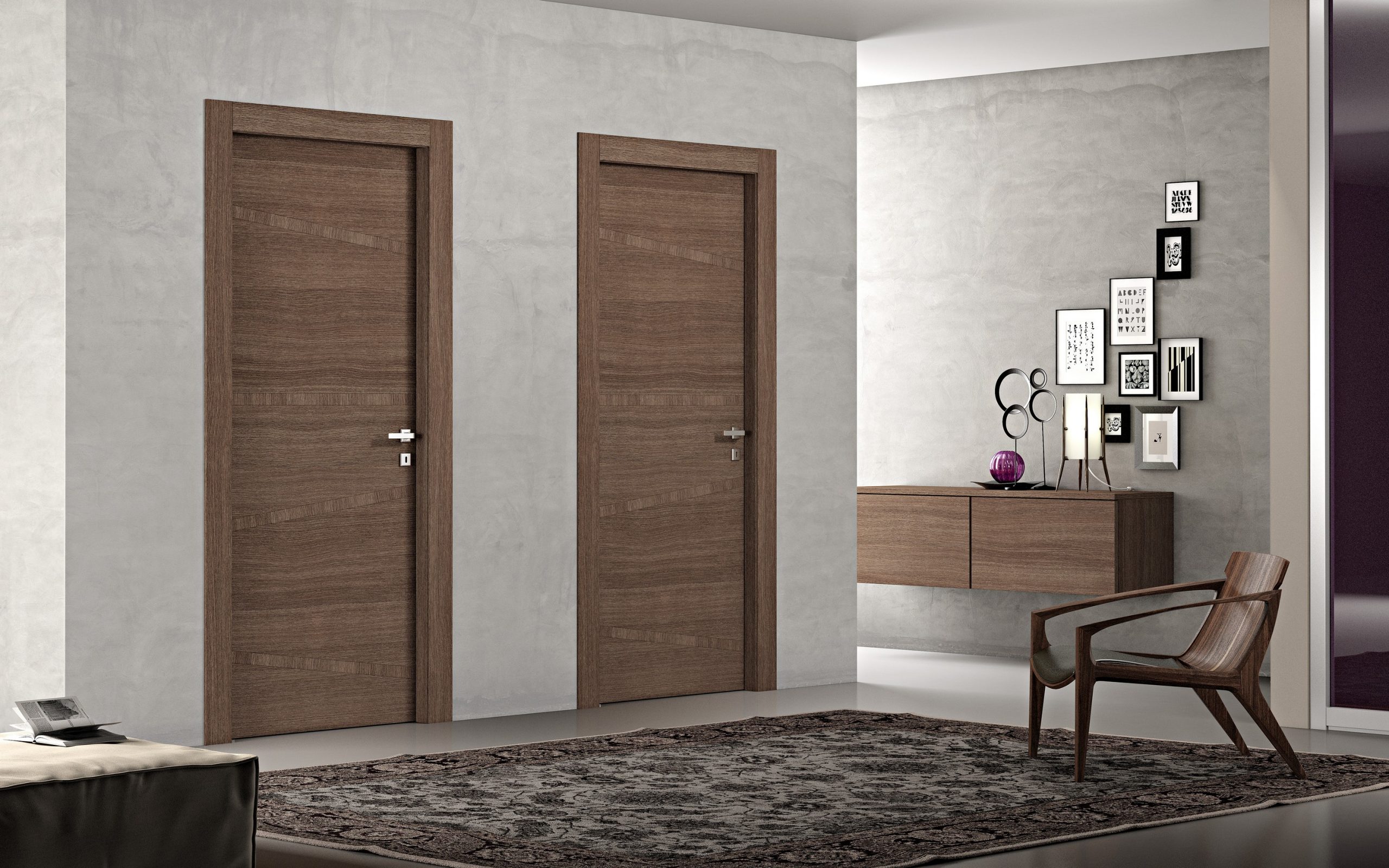
A flush door is a flat slab — no raised panels, no grooves cut into the face (unless you ask for a design). It’s built from a core (solid wood, particle board, or a WPC core depending on the tier) with a laminate or veneer face glued on top. Because there’s less shaping and material involved, flush doors are the most affordable option we sell, and they’re what we recommend for interior doors where budget matters more than ornamentation — bedrooms, store rooms, and rental units.
What a panel door is
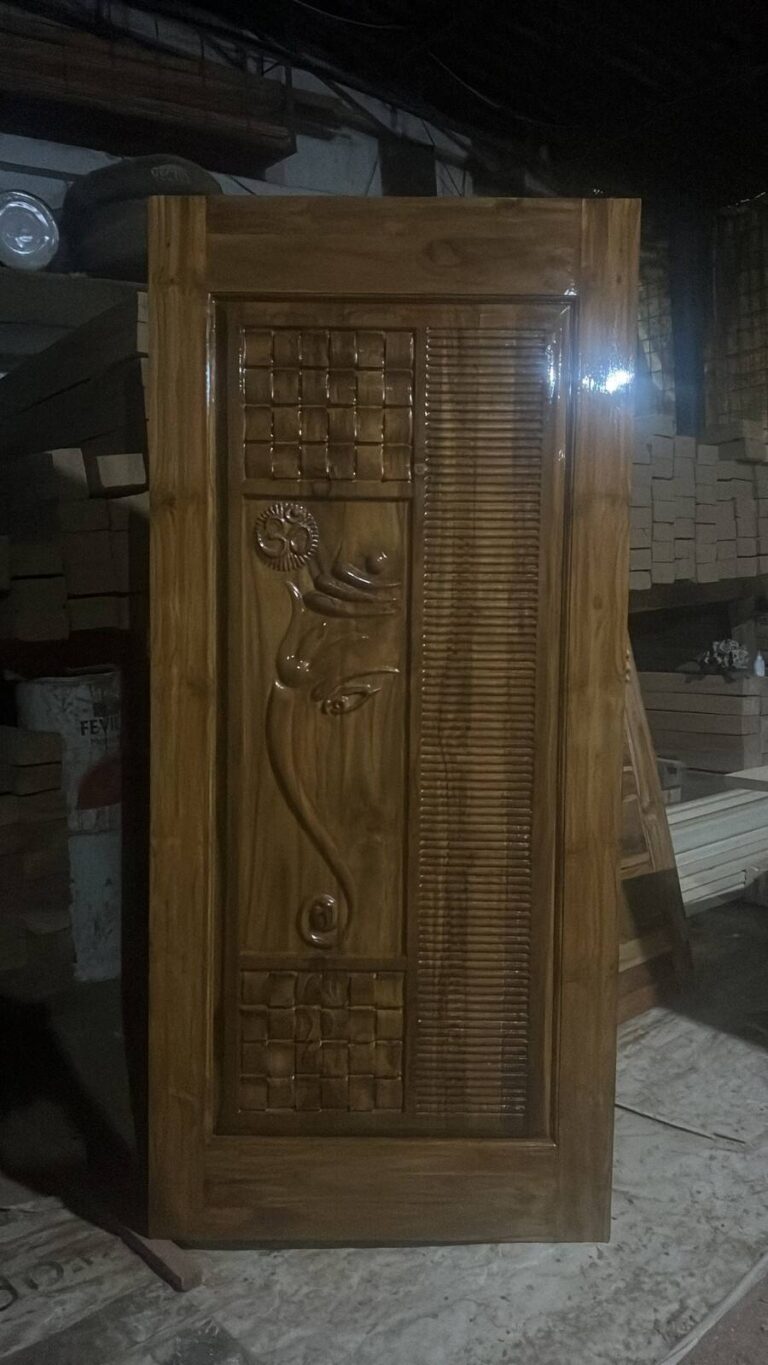
A panel door is built from solid wood members (stiles and rails) with one or more recessed or raised panels set into the frame. This is the traditional teak door construction — more labour, more material, and a lot more visual weight. It’s what we build for main entrances, pooja room doors, and any door meant to be a feature rather than just an opening.
Cost
Flush doors are priced by the piece or by square foot depending on the finish (Jungle Wood, Hardwood, or Pine laminate), starting well below what a solid teak panel door costs. Panel doors are priced by quality tier and square footage since they use significantly more solid timber.
Durability and maintenance
A well-built flush door with a WPC or hardwood core holds up fine in normal interior conditions and needs almost no maintenance. A solid teak panel door will outlast the building it’s in, but it needs periodic polishing to keep the finish looking good — see our teak care guide for that.
Our rule of thumb
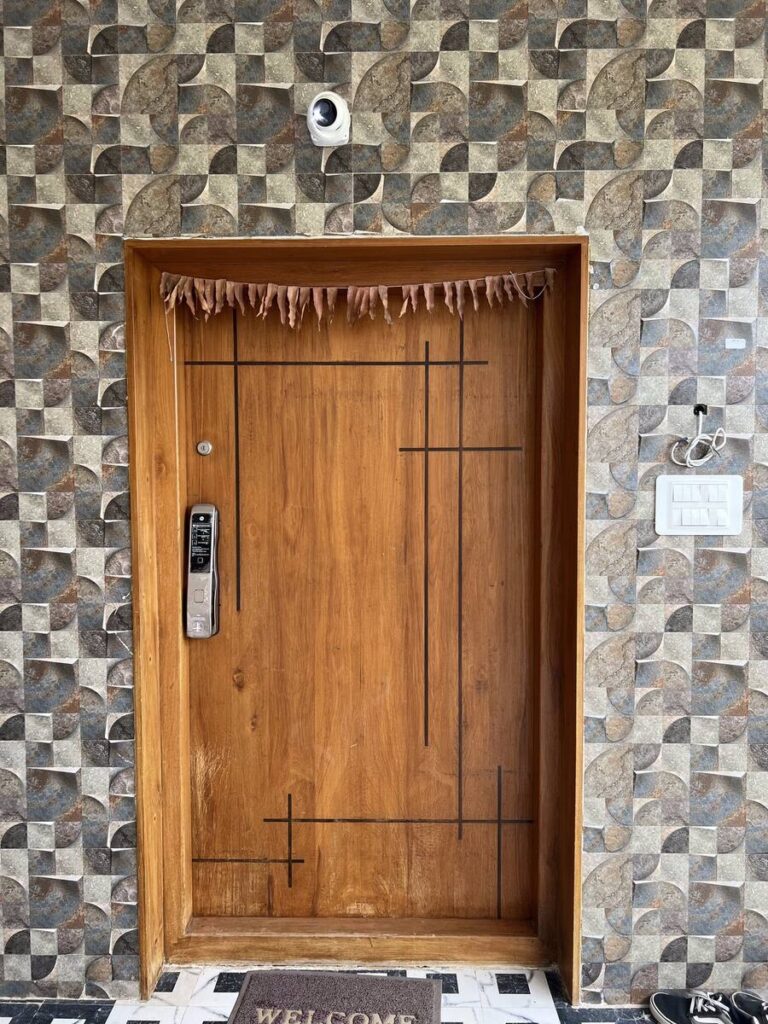
If it’s a door people will notice — the front door, a pooja room, a formal living area — go panel. If it’s a door that just needs to close a room off — bedrooms, bathrooms, storage — flush doors do the job for a fraction of the price. Most homes end up ordering a mix of both, and that’s exactly how we’d size a full-house quote.